The Danville Area Humane Society's drop in euthanasia rates, coupled with a strengthened partnership with an animal rescue group, is bringing a new spirit of collaboration among animal welfare advocates.
The euthanasia rate at the Danville shelter dropped to 58% in 2025, according to data released last week, down from 65% in the previous year.
It's also a steep decline from 2023's rate, which nearly reached 80%.
Paulette Dean, the executive director of the Danville Area Humane Society, believes that too much emphasis is put on those figures.
“When that becomes the sole standard of judgment for any shelter, I consider that very sad, because we live it," she told the Register & Bee in an interview last week. “We live those numbers, we know them, we understand them."
People are also reading…
Dean said that when factoring out things like animals that died nearby, owner-requested euthanasia and animals put down at veterinary clinics, the rate for dogs goes down to 54%.
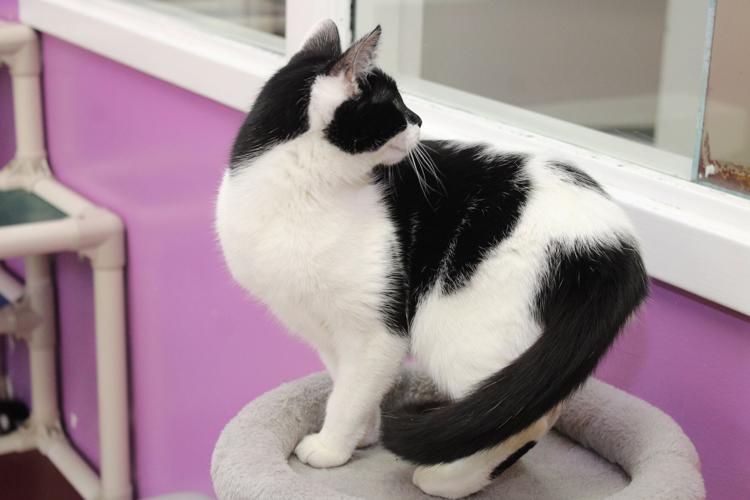
A cat looks out a window on Jan. 30 at the Danville Area Humane Society.
Danville has an open admission shelter, which means it takes in all animals.
Of the 3,184 animals that came to the shelter in 2025, 847 were from other localities because those shelters would not accept them, a state report notes.
“Other shelters are referring people to us to preserve their numbers," Dean explained.
She said they ask people from other areas why the animals are brought to Danville and are often told other shelters were full and told them to come to Danville.
The shelter has come under extreme criticism for the high kill rates since the Danville Deserves Better campaign launched in 2024 by the national organization Best Friends Animal Society.
The figures in 2023 were an anomaly, Dean has previously stated. Coming out of COVID-19, when people sought companion pets during a period of isolation, many of those animals were given up, causing an overflow at shelters nationwide.
Since all animal shelters were in the same situation, transfers weren't possible.
David Wesolowski, manager of grassroots advocacy for Best Friends Animal Society, has pushed for a 90% no-kill rate since the Danville Deserves Better campaign launched, often appearing before City Council to advocate for changes.
“Best Friends Animal Society would like to acknowledge all the incredible rescue groups and shelters that have stepped up this over the last year to take in dogs and cats from Danville Area Humane Society (DAHS) to help decrease the unnecessary killing of shelter animals," Wesolowski wrote in a statement to the Register & Bee.
He said since the campaign started in the city, the live outcomes have increased from 31% to 36%.
"In the spirit of moving past the divisions and disagreements, Best Friends is once again offering our support to ease the burden of overcrowding at DAHS," he said.
Acknowledging that 847 animals came from other locations, he pledged to help the Danville shelter "map out" where those pets were coming from and work with those other areas.
"Best Friends has over 130 network partners in Virginia and an amazing team willing to work towards a solution for these pets so that they do not even need to enter Danville Area Humane Society," he said.
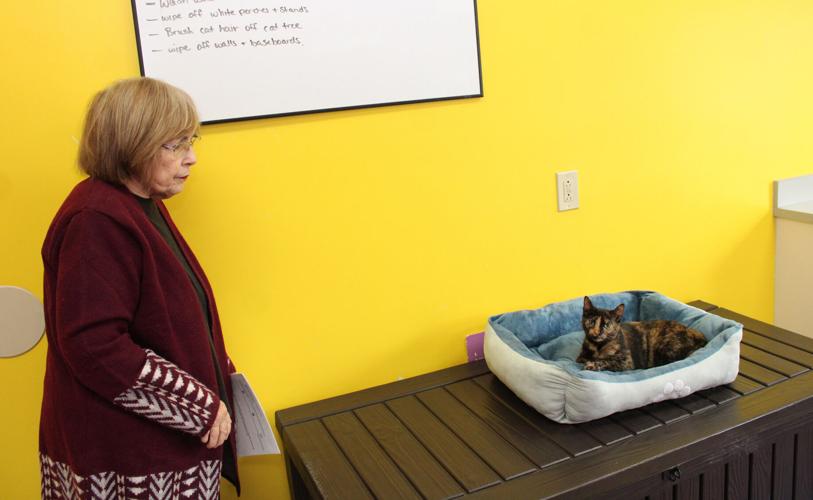
Paulette Dean, the executive director of the Danville Area Humane Society, talks about cats at the shelter on Jan. 30.
A new partnership forms
The Danville Area Humane Society recently donated $7,500 to Homeward Trails Danville, the parent group of Homeward Trails Animal Rescue. The money will bring free and subsidized spay and neuter options, vaccines and microchips to area pets.
The Danville group, which started in June, sterilized, vaccinated and microchipped 325 Danville cats and provided 3,000 pounds of pet food through its weekly pet pantry, Sue Bell, the founder and executive director the statewide Homeward Trails, reported.
With the $7,500 donation, Homeward Trails went to donors and asked for a match, now raising $15,000 to specifically provide Danville services for 2026.
“So it's definitely an impactful program," Bell told the Register & Bee, adding that the community is "excited" to have Homeward Trails here.
“I think we are very excited about 2026 and what it could hold, I think, for the two organizations and the community," Bell said.
Bell was clear that Homeward Trails and a "number of outspoken people in the community" have been holding the shelter accountable for the high euthanasia rates.
“But I will say that animal homelessness and an animal shelter filling up is not the fault of an animal shelter," Bell said.
"It is the result of various factors in a community," she continued. "And so a community problem, like animal homelessness, must have community solutions.”
Dean has often explained the same while having to defend being an open-admission shelter to critics.
“I wish people would look at it a different way," Dean told the newspaper.
"And that is, what would have happened to those animals if the Danville Area Humane Society had not taken them," she continued. “Do we really want people turned away or animals turned away and put them back in that circumstance or put back on the streets?”
She encourages people to research the topic of what happens when a public shelter doesn't accept animals.
"It's not pretty," she said.
Bell said public shelters have a tough job to take in strays and animals that are surrendered, but the community can help by taking advantage of programs offered. Often considered the easiest way to help control the pet population — borrowing the infamous sendoff tagline from the late game show host Bob Barker — the money infusion will help residents spay or neuter their animals.
“There are so many things that community members can be doing to help us and to help this shelter, decrease euthanasia of adoptable animals," Bell said.
“We are very excited to kind of turn a corner here, and have Homeward Trails, and the humane society working together," she continued. “And I think that this increased partnership, along with increased participation by the community, has a tremendous opportunity to see those euthanasia numbers, hopefully drop, by 30% to 40% this time next year.”
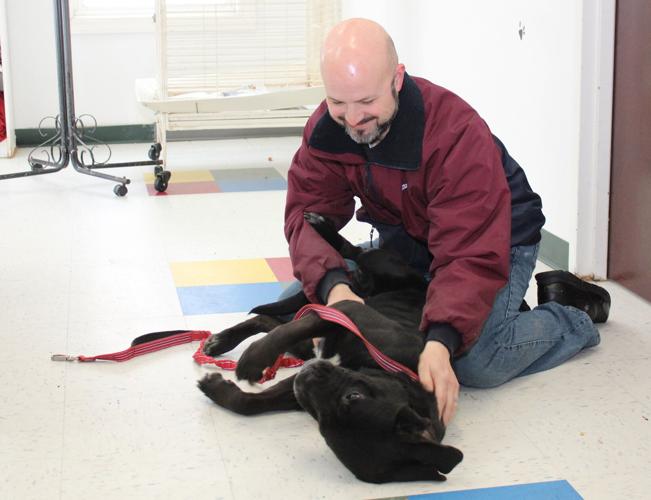
Aaron Stainback, the social media manager for the Danville Area Humane Society, pets a dog on Jan. 30.
Rebranding
In January, the Danville shelter rebranded its longtime approach, now called No Birth, No Stray, No Neglect, to bring awareness to what it's been doing all along.
For the "No Birth" aspect, the shelter helps residents of Danville and Pittsylvania County offset the costs to spay and neuter animals. No Stray comes with the free microchip clinic, which helps to reunite lost pets with their owners.
Dean said the shelter will continue to educate the public on state and local laws in place to protect animals as part of the "No Neglect" part of the campaign.
"We gave what we always have done a name," Dean said of the rebranding.
With weather distractions, Dean hasn't seen much response from the public, but believes that as programs grow — like offering more free microchip clinics — the shelter will see a positive response from residents.
“We completely applaud those programs, and the goal of the shelter to decrease their euthanasia rate," Bell said. "The Danville humane society has been the highest euthanizing shelter in Virginia, and we welcome every opportunity to work with the shelter and community to bring those numbers down drastically.”
Dean explained the goal is to solve the problem of pet homelessness, overpopulation and neglect, but was quick to point out that managed intake — the opposite of open admission — is just a bandage for the problem.
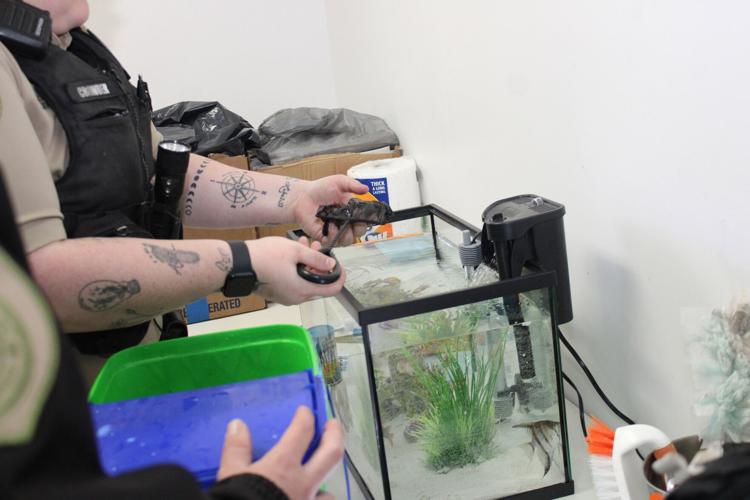
Danville Police Department animal control officers transferred fish seized from a home into an aquarium on Jan. 30 at the Danville Area Humane Society.
The new way of thinking
Bell said the solution comes with partnership, again praising the donation from the humane society and the commitment to work with Homeward Trails.
"It exemplifies the mutually beneficial and very symbiotic partner relationship that happens between a public shelter and a rescue," she said.
As an example, the shelter received a 15-pound blind dog recently left out in the "freezing cold," Bell explained.
After an animal control officer picked it up, it was brought to the shelter.
In situations like this, it will be expensive to treat the animal and likely difficult to find someone to adopt a blind dog.
The shelter contacted Homeward Trails.
“And within 24 hours, we had him at a local eye specialist in the Danville area," Bell said of Homeward Trails taking over the pet.
There's already a foster home for the dog, and some adoption leads have been lined up in Northern Virginia.
“So that right there exemplifies that if a public shelter will form relationships with groups like Homeward Trails, and take a breath, and before euthanizing an animal, reach out and just say, 'Hey, can anyone help these animals and give groups like us a chance,' a whole lot more animals can leave that shelter alive,'” Bell explained. “And I think that's what the community wants and deserves."
Bell said that as far as she was concerned, the two groups are now on the same page.
"I am pledging that Homeward Trails is going to work our butts off in Danville to do whatever we can to be there for the shelter, to be there for the community and create and build sustainable programs that are going to end or decrease animal homelessness in Danville," she said. "And we are very excited.”
The director of Homeward Trails Danville goes to the shelter up to four times a week to build relationships with the staff, Bell noted. The point is for the two groups to work hand in hand, and as Bell explained, show that euthanasia isn't always needed.
"We've shown them that those animals have a place in our society, and they have trusted us to take those animals," Bell said. In turn, Homeward Trails has shown the shelter workers that they are now part of a life-saving solution for the animals.
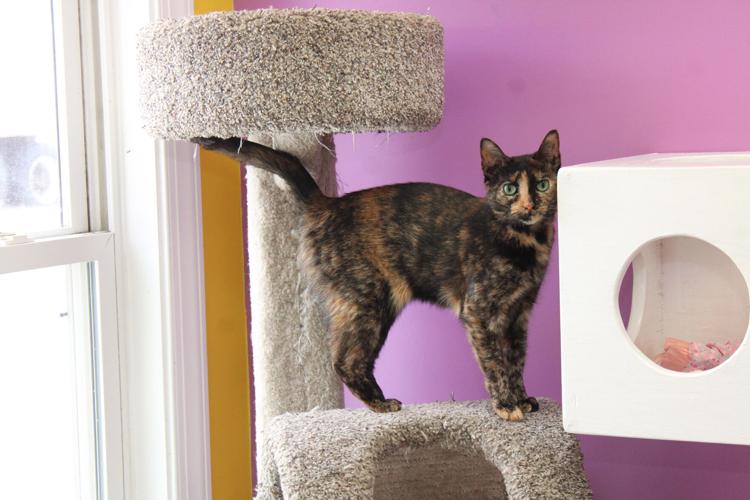
A cat strikes a pose on Jan. 30 at the Danville Area Humane Society.
How to help
Both Bell and Dean said one way to help the situation in Danville is to volunteer for one of the groups.
“I really, really just want to impress upon the fact that neither organization can be successful without the community's help," Bell explained.
"It is not the shelter's fault that they fill up with animals every week," she said. "It is not our fault that we have a waiting list for people needing spay/neuter."
Even just volunteering 30 minutes a month can make a difference.
"There are a lot of pieces in this pie that have to be built to be successful, and we desperately need the businesses and the community members stepping up to be a part of it," she said.
Dean said one goal is to engage the public more and the invitation is "always open" to anyone who wants to come and spend a day — or a couple of days — with them.
"And I think that opinions would change," she said, adding that there is already a lot of public support for the shelter.
If volunteering isn't possible, one way to aid is to donate food for the shelter's pet food pantry, which has expanded.
It's open six days a week. Those wanting to get food from there only need to inquire about it.
“Of course, if there's an emergency, call us," she said. "We don't want any animal to go hungry.”
Also, spreading the word is equally as valuable, like the March 28 free microchip clinic from 11 a.m. to 1 p.m.
"I mean, it's free, and the benefits are wonderful," Dean said.
Bell said she's noticed a marked difference in collaboration since Jan. 1 between her group and the animal shelter, admitting that there are some differing viewpoints between the two groups.
"But we're getting closer, and I think we're working on increased trust, and finding those areas where we agree, and where we can be more effective together," she said.